
How painting reduces stress and anxiety
How painting reduces stress and anxiety is a question more and more people ask in search of emotional well-being. In a fast-paced lifestyle, where the mind rarely rests, painting becomes a simple yet powerful tool to pause, breathe, and reconnect with oneself. Through color, strokes, and creativity, we not only create something visual but also release tension, calm thoughts, and find a space of tranquility amid daily chaos.
In a world where everything moves quickly, where screens absorb us and the mind never stops, more and more people seek ways to pause, breathe… and reconnect with themselves. One of the simplest, most accessible, and most effective ways to do so is through art.
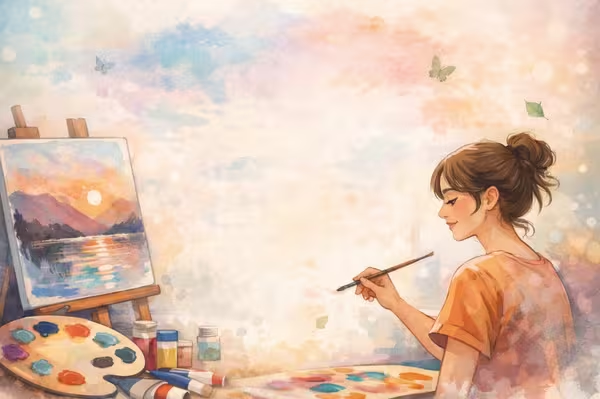
Painting is not just about creating something beautiful. It is a powerful tool to calm the mind and care for your emotional well-being.
Art as a refuge in moments of anxiety
When anxiety appears, we often feel we have no control over what is happening inside us. Painting can become a safe refuge in those moments. You don’t need to understand what you feel or have clear answers; simply starting to create already generates change. The simple act of choosing colors, mixing tones, or letting the brush move freely helps regain a sense of control and calm. Little by little, that creative space transforms into a place where you can let go, breathe, and reconnect with yourself without pressure.
Painting helps you disconnect from mental noise
When you paint, your attention shifts.
You stop thinking about worries, pending tasks, or problems, and focus on color, strokes, and form.
This is what many call the “flow state”: that moment when you are so focused that time seems to disappear.
Your mind rests without you even noticing.
Reduce stress naturally
Various studies have shown that creative activities like painting help lower cortisol levels (the stress hormone).
But beyond science, there is something very simple:
● Slower breathing
● Repetitive and relaxing movements
● Progressive sense of calm
Painting works almost like active meditation.
Express what you cannot say with words
Sometimes we don’t know how to explain what we feel.
And that’s okay.
Art allows you to release emotions without needing to verbalize them:
● Anxiety
● Sadness
● Mental fatigue
● Even contained joy
Painting is a way to free what you carry inside.
It connects you with yourself
In daily life, we tend to pay attention to everything… except ourselves.
When you paint:
● You give yourself your own space
● You listen to what you feel
● You allow yourself to simply "be"
It’s a moment without judgment, without demands, without pressure.
You don’t need to know how to paint
This is one of the most important points.
● It’s not about doing it “right.”
● It’s not about technique.
● It’s not about talent.
● It’s about feeling.
Many people arrive thinking:
"I don’t know how to draw"
And they discover something much more important:
"I do know how to enjoy creating"
If possible, it’s important to join an art workshop or find a space where you can draw and unleash your creativity.
A small ritual to begin
If you want to try it at home:
● Find a quiet place
● Play soft music
● Use any material (watercolors, pencils, acrylic…)
● Start without a goal
Don’t think about the result.
Just let your hand move.
In summary
● Painting is not just art.
● It is mental rest.
● It is expression.
● It is connection with yourself.
And in a world full of stimuli, giving yourself that space can make a big difference.
Contact
- ChilArt
Desirée Rot - 📍Location
Carrer de L’aigua 113, BJ 2 08800 Vilanova i la Geltrú Barcelona - 679 23 24 66
- chilartvilanova@gmail.com