
Artistic activities for children: creative ideas to develop their imagination and skills
Art is one of the most valuable tools for child development. Through creative activities, children not only have fun but also strengthen their imagination, improve their motor coordination, develop their problem-solving skills, and learn to express emotions in a healthy way.
It is not necessary to have expensive materials or be an art expert. With simple items commonly found at home, it is possible to create educational and entertaining experiences that foster creativity in young children.
In this article, you will discover the benefits of artistic activities for children and find numerous ideas tailored to different ages.
Why Are Artistic Activities Important?
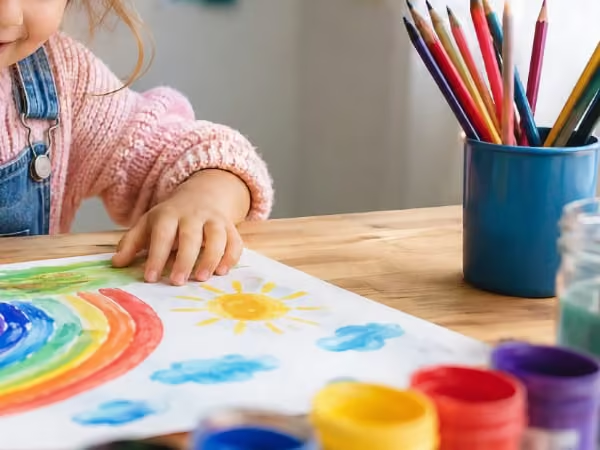
When a child paints, draws, molds, or builds a craft, they are working on many areas of their development at the same time.
Among the main benefits are:
• They foster creativity and imagination.
• They improve hand-eye coordination.
• They develop fine motor skills.
• They stimulate concentration and patience.
• They increase self-esteem by completing their own projects.
• They teach creative problem-solving.
• They help express feelings and emotions.
• They enhance observation and critical thinking.
Furthermore, artistic activities allow for sharing quality family time and creating unforgettable memories.
Basic Materials for Artistic Activities
You don't need a large budget. Some very versatile materials are:
• White and colored paper.
• Cardstock.
• Finger paints.
• Watercolors.
• Tempera paints.
• Brushes of different sizes.
• Colored pencils.
• Markers.
• Crayons.
• Round-tip scissors.
• School glue.
• Recycled cardboard.
• Toilet paper rolls.
• Buttons.
• Yarn.
• Craft sticks.
• Stickers.
• Leaves, flowers, and stones collected from nature.
Many of these materials can be reused to also teach the value of recycling.
Artistic Activities for Children Ages 3 to 5
At these ages, it is important to experiment with colors, textures, and shapes without seeking perfect results.
Finger Painting
One of the favorite activities for little ones.
It allows them to explore colors, mix them, and feel different textures.
You can suggest they paint:
• Animals.
• Flowers.
• Trees.
• Rainbows.
• Their own hands.
Homemade Stamps
With potatoes, sponges, or corks, you can make very original stamps.
Simply dip them in paint and stamp them onto paper.
Paper Collage
Cut out colored papers and let children create free-form figures.
This activity improves coordination and creativity.
Painting with Sponges
Sponges allow for creating very interesting effects.
They can be used to represent:
• Clouds.
• Trees.
• Grass.
• Fish.
• Landscapes.
Modeling with Playdough
Playdough strengthens hand muscles and stimulates imagination.
They can create:
• Animals.
• Food.
• Vehicles.
• Houses.
• Characters.
Artistic Activities for Children Ages 6 to 8
At this stage, they enjoy carrying out more elaborate projects.
Creating a Comic Strip
Invite them to invent a story with four or five panels.
They can draw characters and write short dialogues.
Painting Rocks
Find smooth rocks and paint them with:
• Ladybugs.
• Owls.
• Cacti.
• Friendly monsters.
• Emojis.
Afterwards, they can decorate the garden or use them as paperweights.
Fun Masks
With cardstock, they can make masks of:
• Lions.
• Tigers.
• Dragons.
• Pirates.
• Superheroes.
They can then use them to put on short plays.
Creating Puppets
Using old socks, paper, or craft sticks, puppets can be built to invent stories.
Watercolor Landscapes
Watercolors are ideal for working on patience and learning simple painting techniques.
Activities for Children Ages 9 to 12
As they grow, they seek more creative challenges.
Artistic Journal
Encouraging them to keep a journal where they draw every day helps develop the creative habit.
They can include:
• Landscapes.
• People.
• Animals.
• Everyday objects.
• Imaginative drawings.
Creating a Mural
The whole family can participate in a large mural using different techniques.
Recycled Art
With boxes, bottles, and cardboard, they can build:
• Robots.
• Castles.
• Cities.
• Cars.
• Musical instruments.
Lettering
Learning to decorate letters and words develops precision and an appreciation for design.
Creative Photography
With a mobile phone or a camera, they can carry out small photography projects on:
• Nature.
• Colors.
• Shadows.
• Textures.
• Animals.
Artistic Activities by Season
Spring
• Paper flowers.
• Cardstock butterflies.
• Painting flower pots.
• Creating miniature gardens.
Summer
• Painting with water on the ground.
• Decorating seashells.
• Creating kites.
• Drawing landscapes.
Autumn
• Collages with dry leaves.
• Colorful trees.
• Forest animals.
• Natural garlands.
Winter
• Paper snowflakes.
• Christmas ornaments.
• Greeting cards.
• Cotton ball snowmen.
How to Foster Children's Creativity
It is not necessary to constantly correct drawings or aim for them to be "pretty." What matters is that the child enjoys the creative process.
Some useful tips are:
• Avoid comparing their work to that of other children.
• Value the effort more than the result.
• Allow them to experiment freely.
• Ask questions about their creations.
• Display their artwork at home to reinforce their self-esteem.
• Offer a variety of materials.
• Set aside weekly time for creating.
Ideas for Family Activities
Art also strengthens family bonds.
Some suggestions are:
• Paint a picture together.
• Decorate t-shirts with fabric paint.
• Create a memory album.
• Make birthday decorations.
• Build a cardboard city.
• Create a mural with photographs and drawings.
• Design cards to give as gifts.
• Attend an art workshop as a family.
Long-Term Benefits
Children who regularly engage in artistic activities often develop greater self-confidence, a better ability to solve problems, and a more open attitude toward learning. Furthermore, art fosters skills such as perseverance, observation, and communication, which will be useful both in school and in their daily lives. Artistic activities are much more than entertainment. They constitute an opportunity for children to discover their creativity, learn new skills, and express their inner world in a free and fun way. The most important thing is not to achieve a perfect piece, but to enjoy the process of creating. With a few materials and a little imagination, any moment can become an unforgettable artistic experience for the whole family.
Contact
- ChilArt
Desirée Rot - 📍Location
Carrer de L’aigua 113, BJ 2 08800 Vilanova i la Geltrú Barcelona - 679 23 24 66
- chilartvilanova@gmail.com